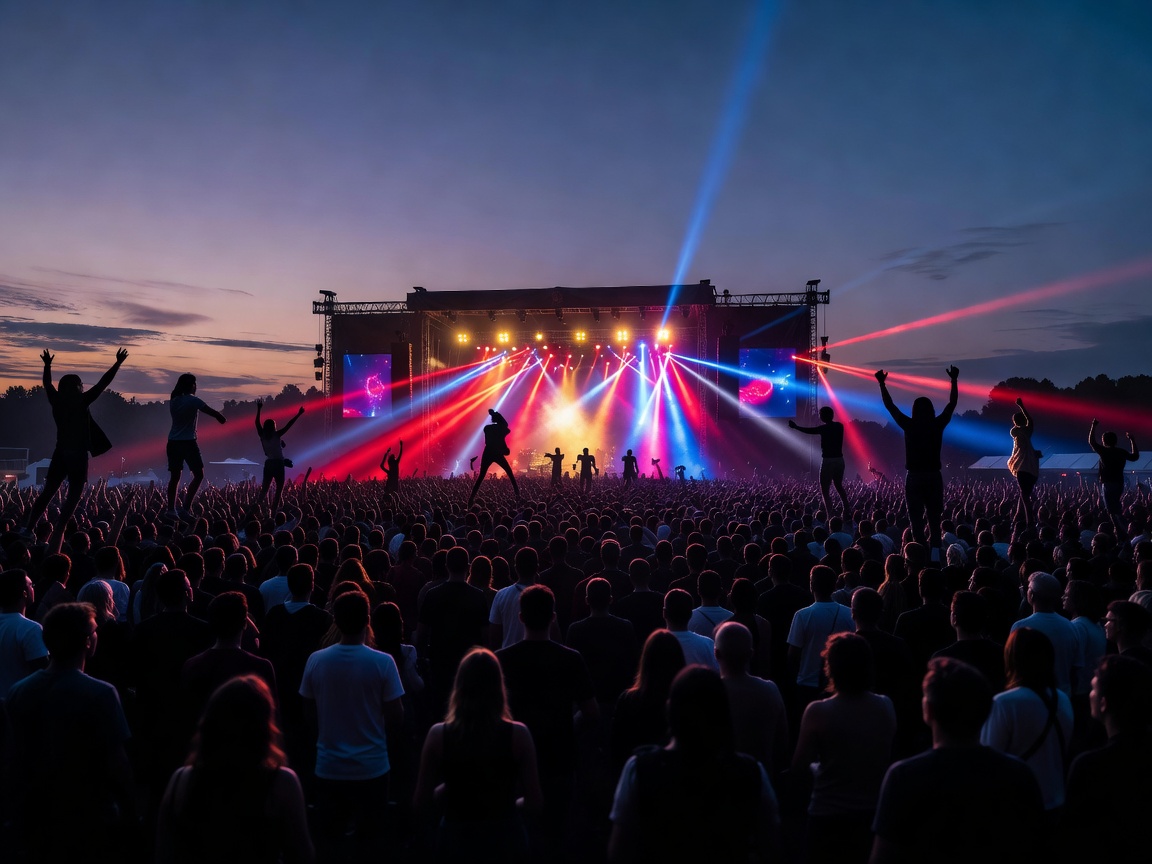
Find the festival setting that suits your listening
A familiar name on a poster is only part of the decision. The grounds, the musical emphasis, and the way a day unfolds can matter just as much as the artists.
Start with the atmosphere
US music festivals range from downtown park gatherings to camping weekends, waterfront listening traditions, and dance events shaped by lighting and late hours. This independent guide is for music fans deciding which kind of experience belongs on their shortlist, especially when several well-known events seem appealing for different reasons.
The examples are grouped by setting and musical identity, not ranked. Lollapalooza and Newport Folk offer very different relationships between audience, place, and performance; neither becomes more suitable simply by being more famous. Start with how you want to listen, then consider how you want to spend the hours between sets.
Think of a festival as a temporary rhythm for your whole day. You might want to move between stages with friends, settle into an attentive afternoon of songwriting, or follow one electronic sound for an extended stretch. Recognizing that preference makes a crowded poster easier to read without treating every name as equally important.
City weekend or destination gathering
The most useful first distinction is not genre. It is whether the festival fits inside a city trip or becomes the center of the entire journey. A hotel-based park event can separate festival time from recovery time. A camping gathering asks you to organize shelter, food, weather exposure, and music as one connected experience.
| Format | Named examples | What to weigh |
|---|---|---|
| City park | Lollapalooza, Outside Lands, Austin City Limits | Urban lodging and transport, park walking, shared exit routes |
| Destination grounds | Coachella, Bonnaroo | Longer travel commitments, accommodation choices, time on site |
| Tradition-led | Newport Folk, Newport Jazz, Telluride Bluegrass | Listening priorities, place-specific weather, seated and standing arrangements |
| Electronic focus | EDC, Movement | Dance-floor stamina, sound preferences, nighttime transport |
These categories overlap. Movement is both an electronic gathering and a downtown Detroit event. Telluride Bluegrass has a focused musical identity but also asks visitors to think carefully about a mountain-town journey. Use the table to identify the main planning pressure, not to put an event in a permanent box.
- Choose a listening goal. Discovery across genres, a particular tradition, and sustained dancing lead to different shortlists.
- Choose a recovery pattern. Consider whether you need a quiet room each night or genuinely want the continuity of camping.
- Map the whole journey. Include arrival, entrances, exits, and the return to lodging rather than stopping at the festival gate.
- Check the edition-specific rules. The organizer’s current information should settle ticket conditions, access arrangements, schedules, and permitted items before you commit.
A common mistake is choosing a format that works only if every set goes perfectly. Leave enough flexibility for a slow meal, a missed connection, or a longer walk. A workable festival plan still makes sense when you skip one performance rather than sprinting across the grounds to protect an overloaded itinerary.
Follow a musical direction
City festivals
Park settings put large, varied programs inside recognizable urban landscapes. Compare Chicago, San Francisco, Austin, and New York through the everyday details of walking, lodging, and getting home after the final set.
Read the city festival guideDestination events
Coachella and Bonnaroo turn the journey and the grounds into a major part of the experience. Burning Man belongs in a separate category: a participatory arts gathering, not a conventional concert festival.
Read the destination guideRoots music
Newport Folk, Newport Jazz, and Telluride Bluegrass make musical traditions a useful starting point. Their identities reward curiosity about arrangements, improvisation, songwriting, and the connections between generations of performers.
Read the roots music guideElectronic music
EDC and Movement show how different a dance-centered festival can feel depending on its setting and production. Knowing whether you prefer broad electronic spectacle or a techno-centered urban context helps clarify your choice.
Read the electronic music guidePlan beyond the poster
Does a city festival mean less walking?
Not necessarily. Large parks and separated stages still involve substantial time on foot. Urban surroundings change transport options, not the scale of the grounds.
Is camping essential at a destination festival?
No single rule fits every event. Accommodation and access arrangements vary; compare the actual travel plan before assuming that camping or a hotel is simpler.
Are genre labels strict boundaries?
Usually not. Folk, jazz, bluegrass, and electronic identities describe a center of gravity rather than every performance on a program.
Where should changing details be checked?
Use the festival organizer’s current materials for dates, lineups, accessibility, entry rules, and transport. Historical character cannot establish those details.
Read all festival planning answers